 Orchards Near Me
Taste Profile
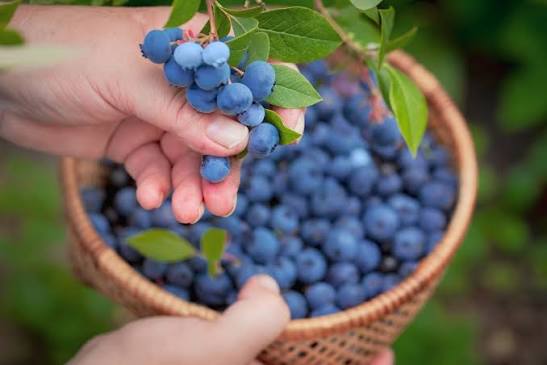
Powderblue has a good, balanced rabbiteye flavor and a distinctive light blue color from a heavy natural bloom, or waxy powder coating, on the skin, along with an upright growth habit well suited to mechanical harvesting. Its flavor is solid and typical of good late-season rabbiteye varieties, offering a dependable, satisfying option once earlier types have already finished producing for the year.
History of Powderblue Blueberries
Powderblue was developed by the University of Georgia's rabbiteye breeding program and released in 1978, the same year as Premier, bred to extend the rabbiteye harvest season later while offering strong productivity and a growth habit suited to mechanical harvesting equipment increasingly used in commercial operations. Its heavy bloom and light color made it visually distinctive among rabbiteye varieties.
Season and Availability
Powderblue ripens late in the season for a rabbiteye variety, typically in July, extending the rabbiteye blueberry harvest well past earlier types like Climax, Brightwell, and Premier.
Nutritional Value
A cup of Powderblue blueberries offers the standard blueberry nutritional profile, roughly 84 calories, 21 grams of carbohydrates, and 3.6 grams of fiber, along with the anthocyanin antioxidants found across the blueberry family, delivered in a good, typically flavored late-season rabbiteye berry.
Best Uses for Powderblue Blueberries
Powderblue's good balanced flavor makes it suitable for fresh eating, baking, and general kitchen use, without any specific standout application beyond being a solid, dependable late-season rabbiteye choice. Its firmness holds up reasonably well for a rabbiteye variety.
Where Powderblue Blueberries Are Grown Today
Powderblue is grown throughout Georgia and other Southeastern rabbiteye regions, valued for its upright growth habit that suits mechanical harvesting and its late-season timing that extends the rabbiteye harvest calendar. Like other rabbiteye varieties, it requires cross-pollination from a different rabbiteye cultivar to fruit well, and its tolerance for Southern heat and humidity makes it a dependable performer even in the hottest parts of the growing season.
How Powderblue Compares to Other Blueberry Varieties
Powderblue's late-season timing sets it apart from earlier rabbiteye releases from the same University of Georgia program, including Climax, Brightwell, and Premier, giving growers a way to spread their rabbiteye harvest across a longer window. Its light, heavily-bloomed color is also more pronounced than most other rabbiteye varieties.
Pollination Needs for Powderblue
Unlike most highbush blueberries, rabbiteye varieties including Powderblue genuinely require cross-pollination from a different rabbiteye variety to produce good yields — self-pollination alone typically results in small, sparse crops rather than a full harvest. Growers commonly pair Powderblue with another rabbiteye variety that blooms around the same time specifically to ensure reliable pollination, which is why rabbiteye plantings are almost always established with at least two compatible varieties rather than a single one.
How to Choose and Store Powderblue Blueberries
Choose Powderblue blueberries that are plump and firm with a visible natural bloom, avoiding any that look shriveled or show soft spots. Store them unwashed in the refrigerator, where they'll keep for 1 to 2 weeks, and rinse only right before eating. For a full breakdown of blueberry storage, see our guide on how to store fresh picked blueberries, and if you're ever unsure whether blueberries have gone bad, check our guide on how to tell if blueberries are bad.
Frequently Asked Questions
What does a Powderblue blueberry taste like?
Powderblue has good, balanced rabbiteye flavor, typical of quality late-season rabbiteye varieties.
When is Powderblue blueberry season?
Powderblue ripens late for a rabbiteye variety, typically in July.
Where did the Powderblue blueberry come from?
Powderblue was developed by the University of Georgia's rabbiteye breeding program and released in 1978.
Why is Powderblue named that?
It has a heavy natural bloom, or waxy powder coating, on its skin that gives it a distinctive light blue appearance.
Is Powderblue suited to mechanical harvesting?
Yes, its upright growth habit was specifically bred to suit mechanical harvesting equipment used in commercial operations.
Where is Powderblue grown today?
Powderblue is grown throughout Georgia and other Southeastern rabbiteye-growing regions.
How many Powderblue bushes should I plant?
At least two, since Powderblue is a rabbiteye variety that requires cross-pollination from a different rabbiteye variety to produce a good crop.
Is Powderblue a good choice for home gardeners?
Yes, though home gardeners should plan to plant it alongside a second rabbiteye variety for pollination, and should have space for the relatively large, vigorous bushes typical of the species.
What type of blueberry is Powderblue?
Powderblue is a rabbiteye blueberry, a distinct species native to the Southeastern United States, named for the pinkish, eye-like appearance of the berries before they fully ripen to blue. Rabbiteye blueberries are generally more heat-tolerant and more adaptable to a range of soil conditions than highbush types, but nearly all rabbiteye varieties, including Powderblue, require a second rabbiteye variety nearby for cross-pollination.
Can Powderblue be grown in a container?
It's possible but not ideal — rabbiteye varieties like Powderblue tend to grow into large, vigorous bushes better suited to open ground than container life.