 Orchards Near Me
Taste Profile
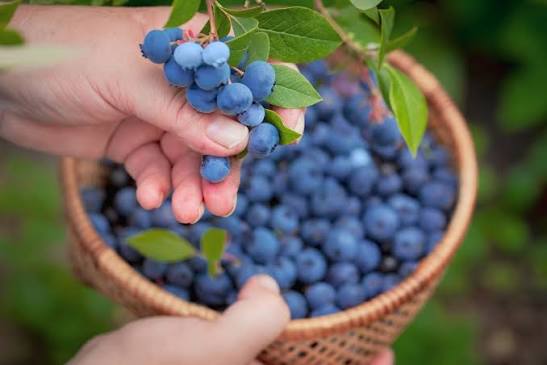
Bluejay has a mild, pleasant flavor with a light blue color and a texture that's easy to pick, though its taste is generally considered less distinctive than newer varieties bred specifically for flavor. It's a workhorse variety more valued for its growing characteristics than for standout taste.
History of Bluejay Blueberries
Bluejay was developed at Michigan State University and released in 1952, the same year as Bluecrop, and bred with an emphasis on ease of mechanical harvesting alongside decent flavor and productivity. Its light blue color and the way its berries detach cleanly from the stem made it particularly well suited to the mechanical harvesting equipment that was becoming more common in commercial blueberry production during that era.
Season and Availability
Bluejay ripens early-to-mid season, typically in late June through early July, similar timing to Bluecrop and Toro. Its timing places it in the middle of the pack among commonly grown highbush varieties.
Nutritional Value
A cup of Bluejay blueberries provides the standard highbush nutritional profile of roughly 84 calories, 21 grams of carbohydrates, and 3.6 grams of fiber, along with the anthocyanin antioxidants common across the blueberry family, regardless of the specific variety's flavor profile.
Best Uses for Bluejay Blueberries
Bluejay's mild flavor and easy-picking berries make it well suited to baking and processing, where its straightforward taste doesn't overpower other ingredients. It's less commonly sought out specifically for fresh eating compared to more flavor-forward varieties like Legacy or Spartan, but it remains a solid, workmanlike choice for general use.
Where Bluejay Blueberries Are Grown Today
Bluejay is grown in Michigan and other Midwest highbush regions, historically valued by commercial growers for its ease of mechanical harvesting, an important trait in large-scale blueberry operations. It requires the same acidic, well-drained soil and winter chilling as other Northern highbush varieties.
How Bluejay Compares to Other Blueberry Varieties
Bluejay's flavor is generally considered milder and less distinctive than Bluecrop, released the same year, or flavor-forward varieties like Legacy and Spartan, though its light color and clean-detaching berries made it historically valuable for mechanical harvesting. It has been increasingly replaced in new plantings by varieties with better flavor.
Pollination Needs for Bluejay
Like most Northern highbush blueberries, Bluejay is self-fertile and can produce a crop entirely on its own, but planting it alongside a second highbush variety with an overlapping bloom time reliably improves fruit set, average berry size, and overall yield through cross-pollination. Bees and other pollinators do the actual work of moving pollen between bushes, so a home garden or orchard block with at least two different highbush varieties blooming together tends to noticeably outperform a single-variety planting, even though Bluejay doesn't strictly require a partner to fruit.
How to Choose and Store Bluejay Blueberries
Choose Bluejay blueberries that are plump and firm with a visible natural bloom, avoiding any that look shriveled or show soft spots. Store them unwashed in the refrigerator, where they'll keep for 1 to 2 weeks, and rinse only right before eating. For a full breakdown of blueberry storage, see our guide on how to store fresh picked blueberries, and if you're ever unsure whether blueberries have gone bad, check our guide on how to tell if blueberries are bad.
Frequently Asked Questions
What does a Bluejay blueberry taste like?
Bluejay has a mild, pleasant flavor, generally considered less distinctive than newer varieties bred specifically for taste.
When is Bluejay blueberry season?
Bluejay ripens early-to-mid season, typically in late June through early July.
Where did the Bluejay blueberry come from?
Bluejay was developed at Michigan State University and released in 1952.
Why was Bluejay historically popular?
Its light color and clean-detaching berries made it well suited to mechanical harvesting equipment used in commercial blueberry production.
Is Bluejay still commonly planted?
It has been increasingly replaced in new plantings by varieties bred for better flavor, though established plantings remain productive.
Where is Bluejay grown today?
Bluejay is grown in Michigan and other Midwest highbush blueberry regions.
How many Bluejay bushes should I plant?
One Bluejay bush can produce fruit on its own, but planting a second variety with an overlapping bloom time improves fruit set and yield through cross-pollination.
Is Bluejay a good choice for home gardeners?
Yes, Bluejay is a solid choice for home gardens, producing fruit reliably on its own while benefiting from a second variety planted nearby for improved yield.
What type of blueberry is Bluejay?
Bluejay is a Northern highbush blueberry, the most widely cultivated type in North America, bred from wild highbush blueberries native to the Eastern United States and adapted to regions with real winter cold. Northern highbush varieties generally need a substantial number of winter chill hours to break dormancy and fruit properly the following year, which is why they're grown throughout the Northeast, Midwest, and Pacific Northwest rather than in mild-winter climates.
Can Bluejay be grown in a container?
Yes, Bluejay can be grown in a large container with acidic potting mix, though it will need more frequent watering than an in-ground planting and a pot roomy enough for its root system to mature.