 Orchards Near Me
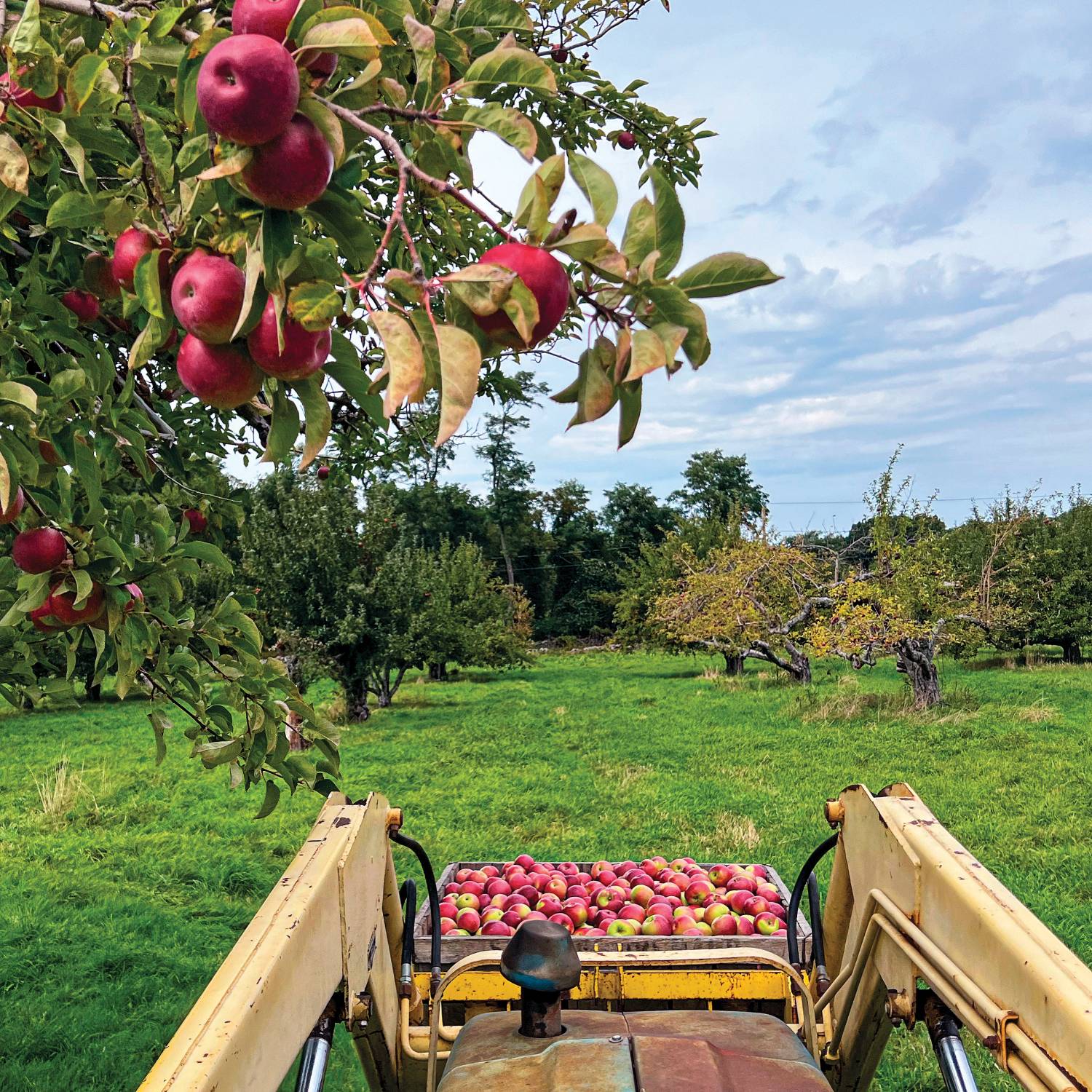
Taste Profile
Ambrosia apples are prized for a honey-like sweetness with very low acidity, giving them a soft, mellow flavor rather than any sharp or tangy edge. The flesh is crisp and fine-grained, and the low-acid profile is exactly what its name promises — a smooth, almost dessert-like eating experience without any of the tartness common in many other varieties.
History of Ambrosia Apples
Ambrosia apples were discovered as a chance seedling in the 1990s on the British Columbia, Canada orchard of Wilfrid and Sally Mennell, who noticed an unusual, unlabeled tree producing distinctive fruit growing among their Jonagold trees. Genetic testing later suggested the variety likely arose from a cross involving Golden Delicious, though its exact parentage was never conclusively confirmed since it appeared as a natural seedling rather than a deliberate breeding cross. The Mennell family propagated and trademarked the variety, and it was released commercially in the early 1990s. Ambrosia has since grown in popularity, particularly in Canada and the Pacific Northwest, prized specifically for its low acidity and honeyed sweetness, and it remains a relatively newer, premium variety compared to century-old cultivars like McIntosh or Granny Smith.
Season and Availability
Ambrosia apples are typically harvested in the United States and Canada from mid-September through October, placing it among the mid-to-late-season varieties. Because Ambrosia is still a relatively newer and more specialized variety compared to mass-market apples, availability can be more limited and regional compared to ubiquitous varieties like Gala or Fuji, though it has expanded significantly since its commercial introduction.
Nutritional Value
A medium Ambrosia apple contains roughly 95 to 105 calories, around 24 to 26 grams of carbohydrates, and a solid amount of dietary fiber and vitamin C, generally in line with other apple varieties. Its very low acidity and pronounced sweetness mean it carries a comparatively higher natural sugar content than tart varieties, similar to Fuji, though it remains a nutrient-dense whole fruit choice rather than a significant sugar contributor in a normal diet.
Best Uses for Ambrosia Apples
Ambrosia's sweetness and low acidity make it best suited to fresh eating, where its honeyed flavor can be fully appreciated without competition from added sugar or spice. It's a popular choice for fruit platters, lunchboxes, and snacking specifically because of its mellow, crowd-pleasing flavor. Baking with Ambrosia is less common, since its low acidity means baked dishes can taste flat or overly sweet without a tarter variety blended in, and its premium price point compared to mass-market varieties also makes it a less practical everyday baking choice.
Where Ambrosia Apples Are Grown Today
Ambrosia is grown primarily in British Columbia, Canada, its place of origin, as well as in Washington State and other parts of the U.S. Pacific Northwest where growing conditions are similar. Because it remains a trademarked, more specialized variety compared to century-old cultivars, Ambrosia production is more concentrated among growers licensed to plant it rather than spread as broadly as ubiquitous varieties like Gala or Red Delicious, which contributes to its somewhat more limited and regional availability along with its premium pricing.
How Ambrosia Compares to Other Apple Varieties
Ambrosia and Fuji are the two sweetest, lowest-acid varieties on this list, and taste testers often find them genuinely difficult to tell apart in a blind comparison, though Ambrosia tends to edge out Fuji slightly in perceived sweetness and has a somewhat finer, less dense flesh. Compared to Gala, Ambrosia is meaningfully sweeter and less tart, and compared to tart varieties like Granny Smith, there's essentially no overlap in flavor profile at all. Ambrosia's main practical distinction from its sweet-apple rivals is availability and price, since it remains a newer, more regionally limited variety.
How to Choose and Store Ambrosia Apples
Choose Ambrosia apples that feel firm with no give when pressed, and check for smooth skin free of soft spots, bruising, or shriveling. Once home, store them in the refrigerator crisper drawer, ideally in a perforated bag, where they'll keep for 4 to 6 weeks — far longer than the roughly one week they'll last at room temperature. For a full breakdown of apple storage, see our guide on how to store fresh picked apples, and if you're ever unsure whether an apple has gone bad, check our guide on how to tell if apples are bad.
Frequently Asked Questions
What does an Ambrosia apple taste like?
Ambrosia apples have a honey-like sweetness with very low acidity, giving them a mellow, smooth flavor without the tartness common in many other apple varieties.
Are Ambrosia apples good for baking?
Ambrosia is better suited to fresh eating than baking, since its low acidity can make baked dishes taste flat or overly sweet without a tarter apple blended in.
When are Ambrosia apples in season?
Ambrosia apples are typically harvested from mid-September through October, placing them among the mid-to-late-season apple varieties.
Where did Ambrosia apples come from?
Ambrosia apples were discovered as a chance seedling in the 1990s on a British Columbia, Canada orchard owned by the Mennell family.
Where are Ambrosia apples grown today?
Ambrosia is grown primarily in British Columbia, Canada, and in Washington State and other parts of the U.S. Pacific Northwest.
Why are Ambrosia apples harder to find than other varieties?
Ambrosia is a trademarked, more specialized variety grown by licensed producers, which makes it more regionally concentrated and less widely available than mass-market apples like Gala or Fuji.
Is Ambrosia a good apple for people who dislike tart flavors?
Yes. Ambrosia's very low acidity and pronounced honeyed sweetness make it one of the best choices available for anyone who prefers apples with essentially no tartness at all.
Was Ambrosia bred deliberately or discovered by accident?
It was discovered by accident, as a chance seedling growing unexpectedly among Jonagold trees on a British Columbia orchard, rather than the result of a deliberate breeding program.