 Orchards Near Me
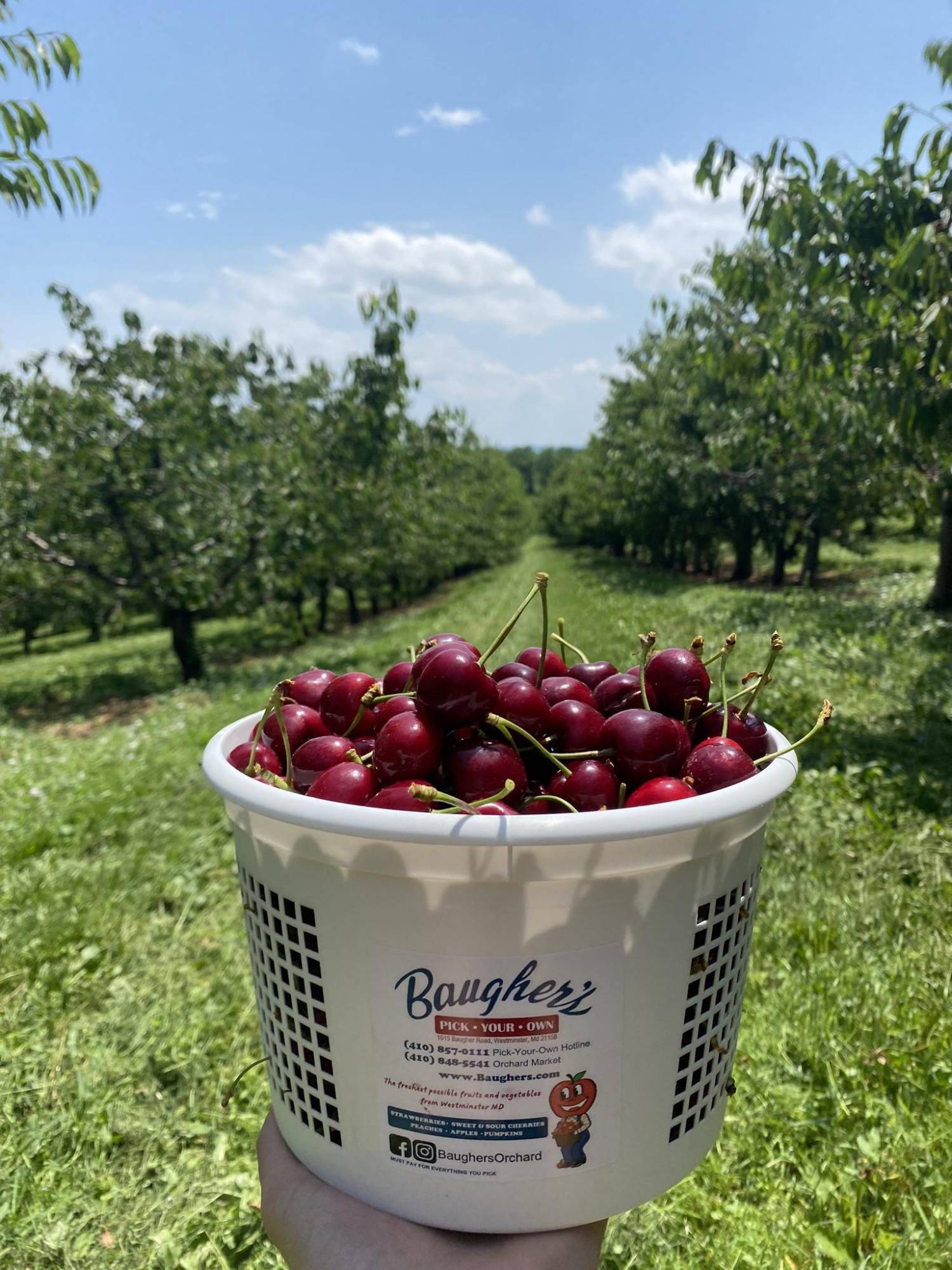
How Long Do Fresh Cherries Last?
Fresh-picked cherries last 1 to 2 weeks in the refrigerator when their stems are left on, but only 1 to 2 days at room temperature, where they soften and lose flavor quickly. The stem plays a bigger role in cherry shelf life than most people realize — it seals the small wound left where the fruit was attached to the branch, and removing it early opens a path for bacteria and mold.
| Storage Method | Shelf Life | How To |
|---|---|---|
| Countertop | 1–2 days | Only for same-day or next-day eating; cherries soften quickly in warm air. |
| Refrigerator | 1–2 weeks | Unwashed, stems on, in a shallow, breathable container rather than piled deep. |
| Freezer | 8–12 months | Pitted, frozen on a tray, then transferred to a bag. |
Countertop Storage
Cherries left at room temperature hold their quality for only about 1 to 2 days before they start to soften and lose their snap. If you're eating them the same day or the next, the counter is fine, but for anything longer, refrigerate right away.
Refrigerator Storage: The Right Way
Store cherries unwashed with their stems still attached, in a shallow container rather than a deep bowl — the weight of cherries piled several inches deep bruises the fruit underneath, and bruised cherries spoil faster. A loosely covered container in the crisper drawer works well, allowing some air exchange without letting the fruit dry out.
PRO TIP: Sort through cherries before storing and set aside any that are split, soft, or have damaged stems. These spoil first and, left in with the rest, can spread mold to otherwise good fruit within a day or two.
Freezer Storage
To freeze cherries, wash and dry them, then remove the pits with a cherry pitter or a small knife. Spread the pitted cherries on a tray in a single layer and freeze until solid before transferring to a bag. Frozen cherries keep for 8 to 12 months and are great in smoothies, baking, and sauces, though the texture is noticeably softer than fresh once thawed.
How to Clean Cherries the Right Way
Rinse cherries under cool water right before eating. A vinegar-water soak (the same 1-to-3 ratio used for berries) can help remove surface residue and any lingering mold spores if you plan to store them a while longer afterward — just be sure to dry them thoroughly before returning them to the fridge.
Common Storage Myths
Myth: Pull the stems off right away to make snacking easier.
Fact: Removing the stem opens the small wound at the top of the cherry to air and bacteria, which speeds up spoilage. Leave stems on until you're ready to eat.
Myth: Cherries can be piled deep in a bowl without any issue.
Fact: The weight of cherries stacked several inches deep bruises the fruit at the bottom of the pile, and bruised cherries spoil noticeably faster than undamaged ones.
What to Do With Extra Cherries Before They Turn
Cherries that have softened past the point of good fresh eating are well suited to pitting and cooking into a compote, sauce, or pie filling, where the heat and sugar make texture a non-issue. A batch of softer cherries also blends well into a smoothie or purées into a quick syrup for cocktails and desserts. Because cherries bruise easily under their own weight, it's common to end up with a mix of perfect and slightly soft fruit from the same batch — sorting them by firmness as soon as you get home and earmarking the softer ones for cooking sooner rather than later helps avoid waste.
Why the Stem Matters More Than You'd Think
The point where a cherry attaches to its stem is the single weakest spot in the fruit's skin, and it's also the entry point that mold and bacteria exploit first. As long as the stem stays attached, it partially plugs that opening and slows moisture loss and microbial entry at the same time. Pull the stem off early, even gently, and you leave that small wound exposed to open air, which speeds up both dehydration and the earliest stages of decay — often invisibly, well before any obvious softness or discoloration shows up elsewhere on the fruit. This is also why cherries with stems that have already dried out and browned are usually a step behind fresher-looking fruit with green, pliable stems still attached, even if the cherries themselves look identical: the stem condition is often the earliest visible signal of how much longer a batch will hold up.
Signs Your Cherries Have Gone Bad
Look for wrinkled or shriveled skin, soft brown spots, mold at the stem end, sticky or leaking juice, a sour smell, and stems that have dried out and turned dark brown or black — a sign the fruit is past its best even if it still looks decent otherwise. See our full guide on how to tell if cherries are bad for more.
Frequently Asked Questions
Should you remove cherry stems before storing them?
No. Leaving the stem on helps seal the small wound where the cherry was attached to the branch, which slows spoilage. Remove stems only right before eating.
How long do fresh cherries last in the fridge?
Cherries stored with their stems on typically last 1 to 2 weeks in the refrigerator.
Can you freeze fresh cherries?
Yes. Wash, dry, and pit the cherries, freeze them on a tray until solid, then transfer to a bag. Frozen cherries keep for 8 to 12 months.
Why do my cherries spoil faster than expected?
Cherries piled deep in a bowl bruise easily under their own weight, and bruised fruit spoils much faster. Store them in a shallow container instead.
Should cherries be washed before refrigerating?
No. Wash cherries only right before eating. Washing before storing adds moisture that speeds up spoilage, the same as with other berries and stone fruit.
What is the best container for storing cherries?
A shallow container that keeps the fruit in one or two layers works best, since piling cherries deep bruises the ones on the bottom under the weight of the fruit above them.